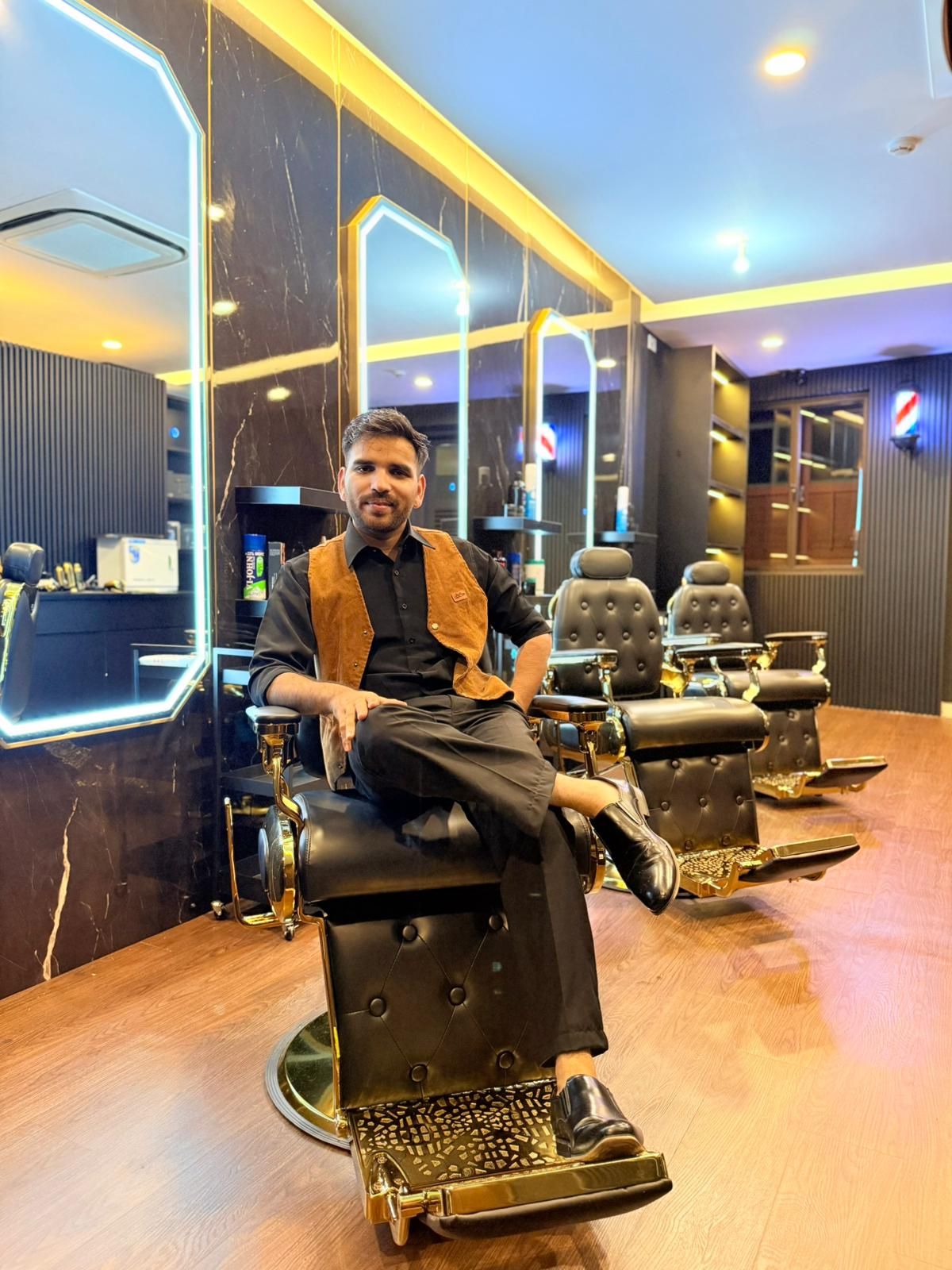

A complete beard grooming routine in Singapore is not the same as one written for London or New York. The humidity changes everything. If you have been following generic beard advice and wondering why your beard still looks patchy, dry, or unruly by noon, the climate is almost certainly part of the problem. This guide covers the full routine: daily habits, weekly maintenance, product choices that actually work in tropical conditions, and when to book a professional beard sculpt in Singapore to reset the shape. Everything here is built around what works on Asian hair textures in a high-humidity environment, not what sells beard oil in winter markets.

Why Singapore's Climate Demands a Different Approach
Most men in Singapore discover the same thing: their beard behaves differently here than it did overseas, or differently than it looks in the YouTube tutorials they follow.
The honest answer is that 80 to 90 percent relative humidity, sustained across most of the year, creates specific challenges that temperate-climate grooming advice does not address.
First, excess moisture causes beard hair to swell along the cuticle. This makes coarser Asian hair textures feel even rougher and look more unruly, particularly in the mustache and jawline area where hair grows at mixed angles. Second, sweat accumulation under a beard in Singapore heat is significant. Without a proper cleansing routine, that moisture becomes a breeding ground for the kind of skin irritation and beard dandruff (seborrheic dermatitis is the clinical name) that men here often mistake for dry skin. Third, oil-heavy beard products react badly to this environment. What keeps a beard soft in Edinburgh in February will leave your beard looking greasy and flat by the time you reach Raffles Place on the MRT.
Adjusting for these factors is not complicated. It requires understanding what you are actually trying to achieve with each step of the routine.
The Daily Beard Grooming Routine: Step by Step
Step 1: Cleanse (Morning, Every Day)
In Singapore, you sweat overnight. Start every morning with a beard-specific cleanser, not a regular shampoo and not a bar soap. Both strip the natural sebum your skin produces, which is already working harder than usual to keep up with your skin's moisture needs in tropical heat.
A pH-balanced beard wash used daily removes sweat, dead skin cells, and any product residue from the previous day. Work it in with your fingertips using small circular motions at the skin level, not just through the hair. Rinse thoroughly. Incomplete rinsing leaves residue that dries into white flakes.
If you go to the gym in the evenings or sweat heavily during the day, a second light rinse with water only (no product) is worth adding before bed. You do not need to shampoo twice daily.
Step 2: Pat Dry, Then Wait 60 Seconds
Do not apply anything to a soaking wet beard. Pat dry with a clean towel until the beard is damp, then wait approximately 60 seconds before applying any product. Applying beard oil to a wet beard dilutes it and reduces absorption. The hair shaft needs to be damp, not wet, to draw in oil effectively.
This is a step most men skip. It is also one of the reasons beard oil feels like it "does nothing" when it actually works well applied correctly.
Step 3: Apply Beard Oil (Sparingly)
For Singapore's humidity, less is more. Men who grew beards in cooler climates often over-apply when they move here because their instinct is to compensate for dryness. In high humidity, the air itself provides significant moisture. The role of beard oil is to lock that moisture in and soften the hair cuticle, not to add moisture from scratch.
Two to three drops for a short beard (up to 3cm). Four to five drops for a medium beard (3 to 6cm). Work it between your palms first, then press into the beard from skin outward. Do not rub it in like you are washing your hands.
For product selection: lightweight carrier oils like jojoba and argan absorb cleanly. Avoid castor oil as a primary carrier in Singapore. It works well in dry climates but creates a heavy, tacky feel in humidity that most men find uncomfortable by mid-morning.
Step 4: Comb or Brush to Train the Hair
After applying oil, comb through the beard with a wide-tooth comb or a boar bristle brush. The direction matters. Train your beard hairs to grow downward along the cheeks and outward from the chin. This is particularly relevant for men with Asian coarser hair textures, where individual hairs tend to grow at irregular angles. Consistent daily combing in one direction over several weeks visibly reduces patchiness by training wayward hairs to lie flat.
In my chair, I see this every week: men who believe their beard is too patchy to grow out, when the actual issue is untrained growth direction rather than true patchiness. Six weeks of daily combing often changes the picture significantly.
Step 5: Trim the Neckline Daily (or Every Two Days)
The neckline is where an unkempt beard starts to look unkempt. In Singapore, the general appearance standard in professional environments leans conservative. A beard with a clean, sharp neckline reads as groomed even if it is relatively long. A beard with an undefined neckline looks unfinished regardless of its length.
For self-trimming: find your Adam's apple and draw an imaginary curved line from the bottom of each ear to that point. Everything below that line gets trimmed. Use a trimmer at zero guard, not a razor, unless you are confident in freehand technique. Razors make mistakes harder to fix.
